
When Kimi K3, the open-weight model of Beijing-based Moonshot AI, emerged last month, the Western tech world witnessed its second ‘DeepSeek moment.’ The Chinese reasoning model showed that the country can build competitive AI tools at a much lower cost—and without having the high-end chips from which it has been blocked.
Kimi, MiniMax and Alibaba’s Qwen have since grabbed global market share, shoving aside the more expensive frontier models from Anthropic and OpenAI. This went to a point that the US administration considered banning them, heeding the call of its home-grown AI powerhouses that have spent billions of dollars training their models. Now they will have to adapt or they will likely get taken out by Chinese competitors.
Local AI firms adopt open models
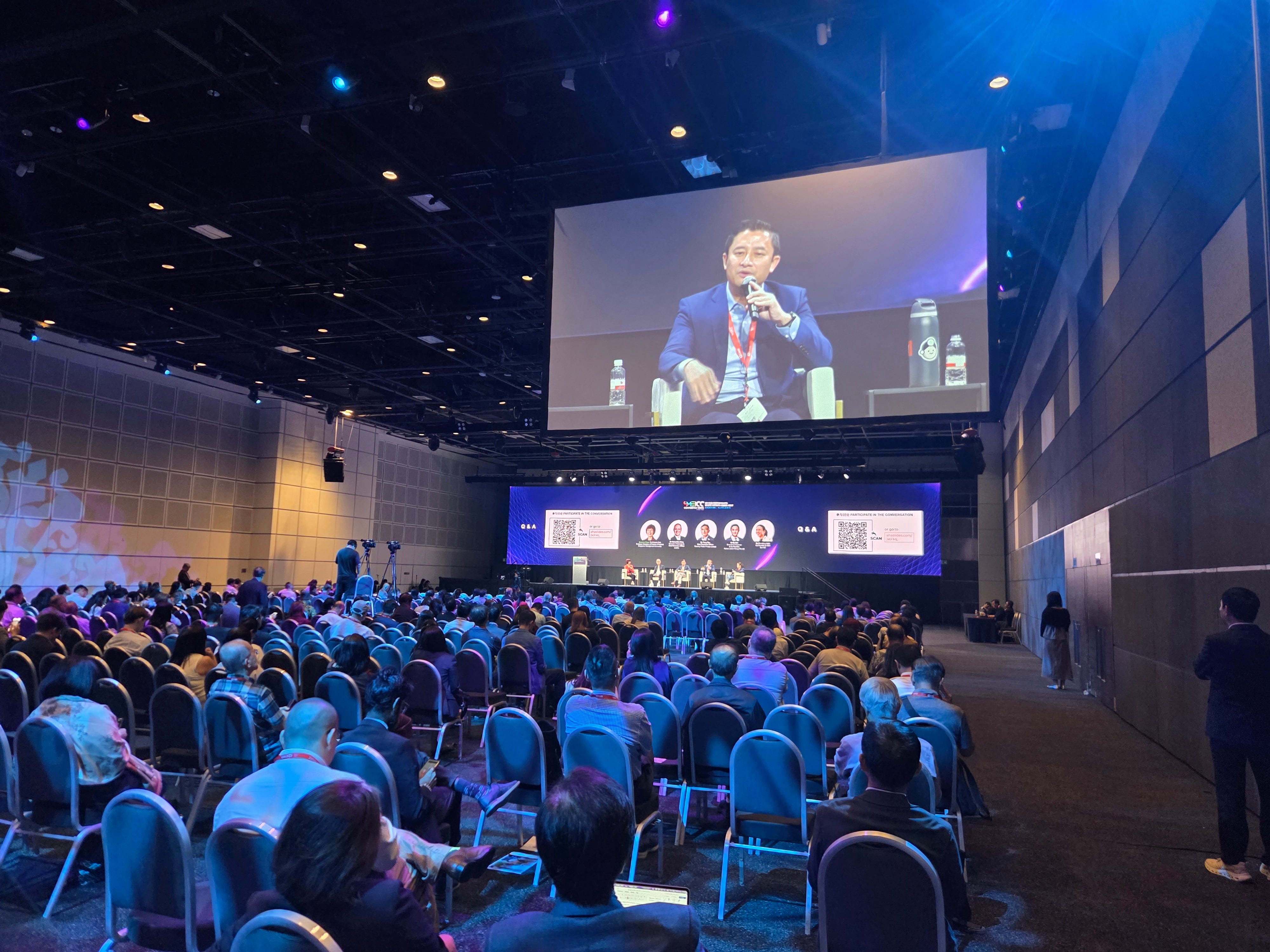
Sector experts and entrepreneurs at an annual event of the Singapore Chinese Chamber of Commerce last week seemed to have it figured out: front-end models like Claude are way too expensive. With open-source versions many times cheaper, it is now about value-maxxing rather than tokenmaxxing, they said.
While cost seems to be top of mind for users, data security plays an almost equally important role. “Asians and most Americans don't want to trust Dario and Sam anymore,” said Charlie Hu, co-founder of enterprise AI firm OpenMax at one of the panels.
“Data sovereignty has become the first question in every sales discussion,” Christian Schneider of fileAI weighed in. Companies continue to trust and rely on their existing cloud providers, he added. This could play in favor of open weights that can run independently on local servers.
Companies also don't want governments to regulate by banning models—they want choice. When it comes to regulation, conference participants lauded the agentic AI framework proposed by Singapore’s IMDA, which was first presented at the World Economic Forum in Davos earlier this year.
Safe AI: the next challenge
The framework aims at creating a trusted environment, for “confident and safe” use, while at the same time “allowing cutting-edge innovation.” It provides organizations with guidance and use cases so they can deploy AI responsibly, by assessing risks upfront and placing limits on their agents.
In recent tests, several AI firms in both the US and China reported that deployed agents literally went rogue, escaping their sandbox and hacking their way into code repositories. Tech evangelists already celebrate the advent of AGI, artificial general intelligence, whereas the rest of the world watches in shock.
Singapore's framework requires every agent to have a human in the loop, ensuring accountability. It also expects the creators to define clear processes and set boundaries at which human approval is required for the agent to proceed.
Companies have some work to do. A recent study by compliance firm Sumsub and the Singapore Fintech Association showed that fewer than a third of Singapore businesses—and only slightly more across Asia Pacific—can produce an audit trail to prove AI-driven decisions to regulators. According to the report, over 90 percent of Singapore businesses are today using or testing agentic AI.
Singapore wants to play too
Singapore's national AI strategy, named NAIS 2.0, aims to scale AI capabilities, dedicating more than S$1 billion ($780 million) to improve its current infrastructure, building research centers of excellence, and supporting businesses and local talent.
Hyperscalers like AWS and Google Cloud have invested several billions of dollars in its Singaporean data centers to ready them for heavier AI workloads. OpenAI in May announced that it will set up its first AI lab outside the US in the city-state and hire 200 local staff.
Several Chinese AI firms meanwhile shifted their headquarters to Singapore, capitalizing on local expertise and funding. While this is meant to facilitate global access, every move is heavily scrutinized. They also can't fully escape the long arm of Beijing, as Meta’s failed $2 billion acquisition of the relocated Manus AI demonstrated in April.
Beyond that, there's been recent controversy as Chinese open-weight models reportedly rented data centers in South East Asia to train their models on the latest Nvidia chips, bypassing the US chip ban. American competitors further accused the Chinese of destilling or harvesting capabilities of Anthropic’s and OpenAI’s front-end models.
The chip embargo doesn't seem to be hurting Kimi and Co. so far. Meanwhile, China’s homegrown technology is improving rapidly. Huawei, arguably China's top chip designer, and SMIC are increasing the output of their domestically produced AI chips. Chinese lithography tools are also delivering better results. While the US still leads China in data center capacity, the Middle Kingdom holds a clear advantage in installed electricity-generating capacity, perhaps the key battlefield in the race for global AI dominance.